
Ayodhya Travel

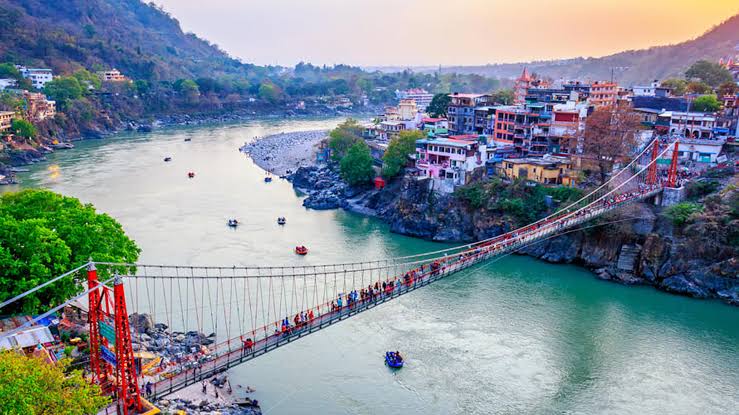

Ram Jhula is another iconic suspension bridge in Rishikesh, similar to Laxman Jhula but larger and more structurally sound. It is a vital link for pilgrims and tourists visiting the various ashrams on the eastern bank of the Ganges.
Here is everything you need to know about it:
Built In: It was constructed in 1986, making it much newer than the original Laxman Jhula.
Architecture: It is an iron suspension bridge that spans the river Ganga, connecting the area of Muni Ki Reti (Tehri Garhwal) to Swargashram (Pauri Garhwal).
Length: It is slightly longer than Laxman Jhula, offering a magnificent view of the emerald-green river and the surrounding Himalayan foothills.
While Laxman Jhula is known for its "vibrant/cafe" culture, Ram Jhula is the spiritual hub of Rishikesh. It provides direct access to some of the most famous ashrams in the world:
Parmarth Niketan: Famous for its world-renowned evening Ganga Aarti.
Geeta Bhawan: Known for its vast complex where devotees stay and read holy scriptures written on the walls.
Sivananda Ashram: A premier center for yoga and vedanta.
The "Beatles" Ashram: Located a short walk from the bridge, where the famous band stayed in 1968.
The Evening Ganga Aarti: Standing near the bridge or sitting on the steps of Parmarth Niketan during the Aarti is a soul-stirring experience.
Boat Rides: If you don’t want to walk across the bridge, you can take a shared motorboat to cross the river for a small fee.
Shopping: The markets on both sides of Ram Jhula are famous for high-quality Rudraksha, precious stones, yoga books, and Ayurvedic medicines.
| Feature | Details |
| Status | Open (Pedestrians and two-wheelers are allowed). |
| Entry Fee | Free |
| Best View | From the center of the bridge during sunset. |
| Current Load | Since Laxman Jhula is closed, Ram Jhula is currently facing higher crowds. |
Two-Wheeler Traffic: Unlike Laxman Jhula (which was mostly pedestrians), local residents are allowed to take bikes across Ram Jhula. Be careful while walking, as it can get quite narrow and busy.
Monkey Alert: The monkeys here are very "professional" thieves. Avoid carrying plastic bags or food in your hand, and keep your sunglasses inside your bag.
Photography: The bridge offers one of the best angles to photograph the "Tera Manzil" temple in the distance and the rafting boats passing below.
Ram Jhula: Stronger, larger, busier, and closer to the big ashrams and the famous Ganga Aarti.
Laxman Jhula: More historic, smaller, currently closed, and closer to the adventure cafes and trekking points.